
Go All Out for Economic Growth | Longquan: Booming Auto Industry with Hundred-Billion-Level Innovation Strength
March 14
In-depth Report from Lishui Daily
Longquan’s Automotive Air-Conditioning Component Industry Takes Innovation as the Key
Fosters Robust New Quality Productive Forces
Drives Fresh Growth of This Traditional Industry
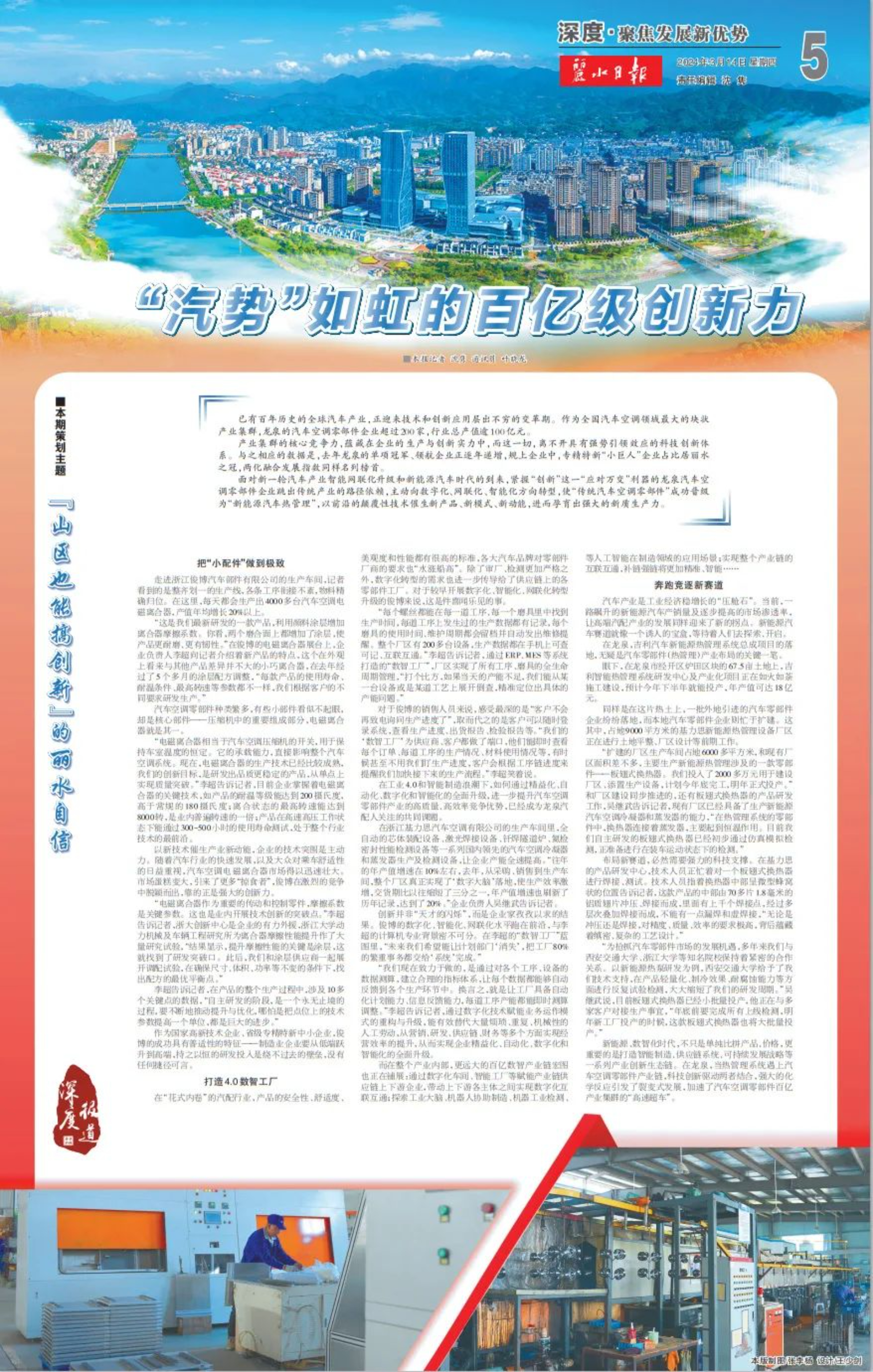
The global automotive industry with a century-long history is undergoing a period of transformation marked by emerging technologies and innovative applications. As China’s largest industrial cluster specializing in automotive air-conditioning products, Longquan is home to over 200 manufacturers of automotive air-conditioning components, with the total industrial output value exceeding RMB 10 billion.
The core competitiveness of an industrial cluster lies in manufacturers’ production and innovation capabilities, which rely heavily on a robust technology innovation system with strong leading effects. Relevant statistics show that the number of single-product champion and leading enterprises in Longquan has been rising year by year. Among industrial enterprises above designated size, the proportion of specialized, sophisticated, unique and innovative "little giant" enterprises ranks first in Lishui, as does the integration index of industrialization and informatization.
Faced with the intelligent connected upgrading of the automotive industry and the arrival of the new energy vehicle era, Longquan’s automotive air-conditioning component manufacturers regard innovation as an all-purpose tool to tackle changes. Breaking free from reliance on traditional industrial development paths, they take the initiative to transform toward digitalization, connectivity and intelligence, seizing opportunities to achieve overtaking on new tracks. They have stepped into the new track of new energy vehicle thermal management, opening broader space for industrial expansion and thereby cultivating strong new quality productive forces.

Perfecting Tiny Components to Perfection
Entering the production workshop of Zhejiang Junbo Auto Parts Co., Ltd., reporters saw neat production lines with smoothly connected working procedures and accurately placed materials. More than 4,000 automotive air-conditioning electromagnetic clutches are manufactured here every day, with an annual output value growth of over 20%.
"This is our newly developed product that uses pigment coating to increase the friction coefficient of the clutch. As you can see, coating is applied to both friction surfaces to make the product more wear-resistant and ductile." At Junbo’s electromagnetic clutch exhibition stand, Li Chao, the company’s person in charge, introduced the features of the new product to reporters. Though this compact clutch looks barely different from other products in appearance, its coating formula was adjusted for more than five months last year. "Each product has distinct parameters including service life, temperature resistance and maximum rotating speed, and we conduct R&D and production according to clients’ varying requirements."
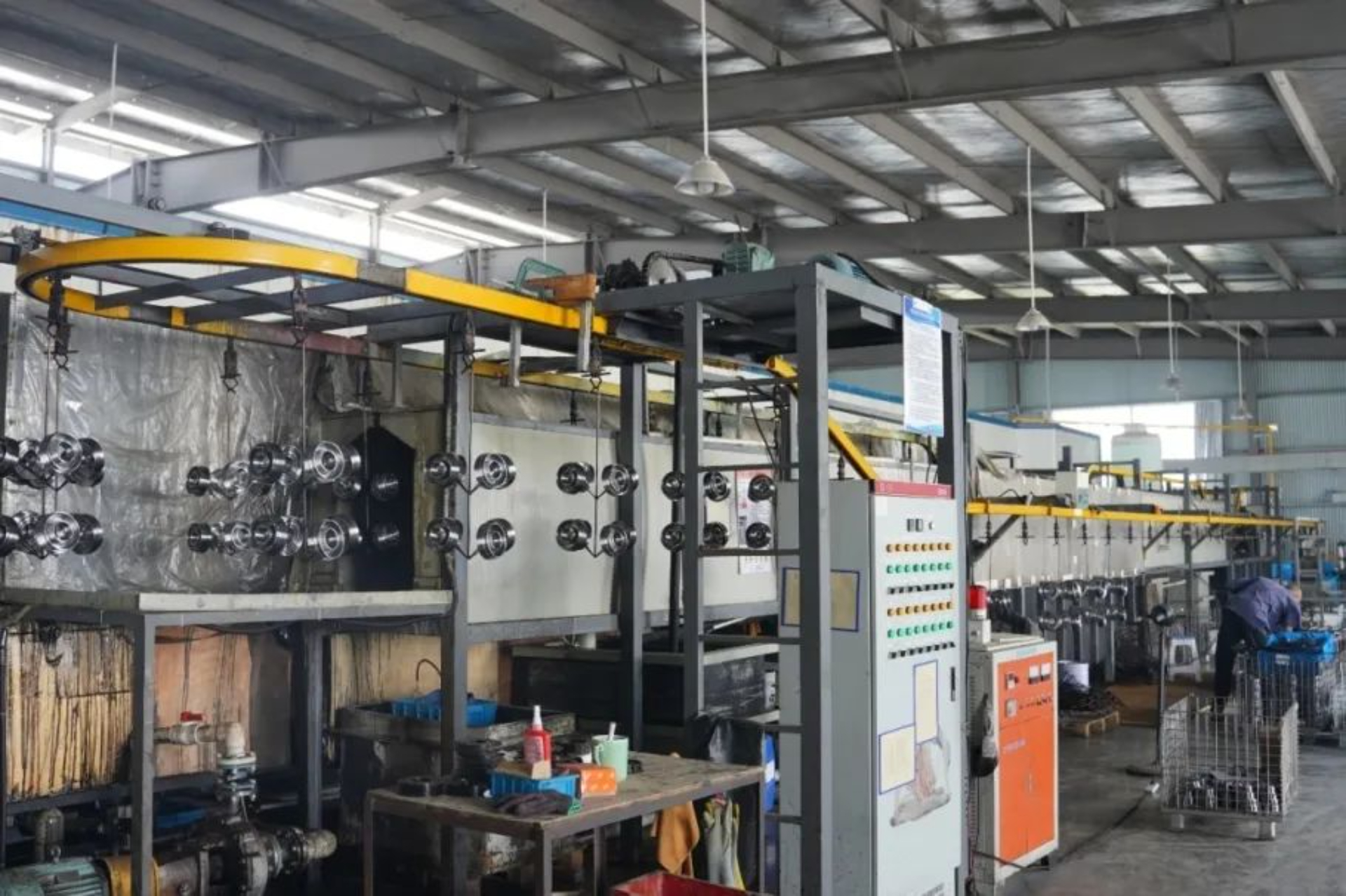
There is a wide variety of automotive air-conditioning components. Some seemingly trivial small parts serve as core elements of compressors, and electromagnetic clutches are one such example.
"The electromagnetic clutch acts as a switch for automotive air-conditioning compressors, maintaining a constant cabin temperature. Its load-bearing capacity directly affects the entire automotive air-conditioning system. While production technology for electromagnetic clutches has matured, our innovation target is to develop products with more stable quality and achieve quality breakthroughs at the component level." Li Chao told reporters that the enterprise has mastered core technologies for electromagnetic clutches. For instance, the product can withstand temperatures up to 200°C, higher than the standard 180°C; its maximum engagement rotating speed reaches 8,000 rpm, double the industry average; and it can pass a 300–500-hour service life test under high-speed and high-pressure operating conditions, placing the company at the cutting edge of the industry.
New technologies fuel fresh industrial momentum, with enterprises’ technological breakthroughs as the primary driving force. Driven by rapid growth of the automotive sector and rising public demand for riding comfort, the market for automotive air-conditioning electromagnetic clutches has expanded rapidly. The expanding market has attracted numerous competitors, and Junbo stands out amid fierce competition thanks to its robust innovation capacity.
"As a critical transmission and control component, friction coefficient is the key parameter of electromagnetic clutches and a major breakthrough point for industrial technological innovation," Li Chao explained to reporters. The Longquan Innovation Center of Zhejiang University provides strong external technical support for the enterprise, and the Institute of Power Machinery and Vehicle Engineering of Zhejiang University has conducted extensive research and experiments to boost clutch friction performance. "Research results show that coating holds the key to improved friction performance, marking our R&D breakthrough. We then carried out blending tests together with coating suppliers to find the optimal formula balance while keeping product dimensions, volume and power unchanged."
Li Chao said more than ten key data points are monitored throughout the entire product production process. "Independent R&D is an endless journey of continuous upgrading and optimization. Even a one-unit improvement in a single technical parameter represents remarkable progress."
As a national high-tech enterprise and provincial-level specialized, sophisticated, unique and innovative SME, Junbo’s success carries universal implications. To move manufacturing enterprises from low-end to high-end markets, sustained R&D investment is an indispensable foundation with no shortcuts.
Building Industry 4.0 Smart Digital Factories
Amid intense competition in the auto parts industry, strict standards apply to product safety, riding comfort, appearance and performance, while major automotive brands set increasingly higher requirements for component suppliers. Apart from stricter factory audits and product testing, demand for digital transformation has been passed down to all component manufacturers along the supply chain. As an early adopter of digital, intelligent and connected transformation, Junbo embraces this trend wholeheartedly.
"Every screw can be traced to its production time across every procedure and mold. All production data generated in each process is recorded, while each mold’s service hours and maintenance cycles are archived with automatic maintenance reminders. The factory houses over 200 pieces of equipment, with all production data accessible, recordable and interconnected via mobile phones," Li Chao told reporters. The smart digital factory built with ERP, MES and other systems enables full lifecycle management of all production procedures and molds. "For example, if daily output falls short, we can trace the root cause back to a specific piece of equipment or production process to pinpoint output bottlenecks accurately."
Junbo’s sales staff feel the most tangible change: clients no longer call to enquire about production progress. Instead, clients can log into the system anytime to view production schedules, delivery reports and inspection records. "Our smart digital factory features dedicated portals for suppliers and clients, allowing them to view real-time production status and material consumption for each order and process. Sometimes clients even remind us to accelerate subsequent production based on progress tracking, without our follow-ups," Li Chao said with a smile.
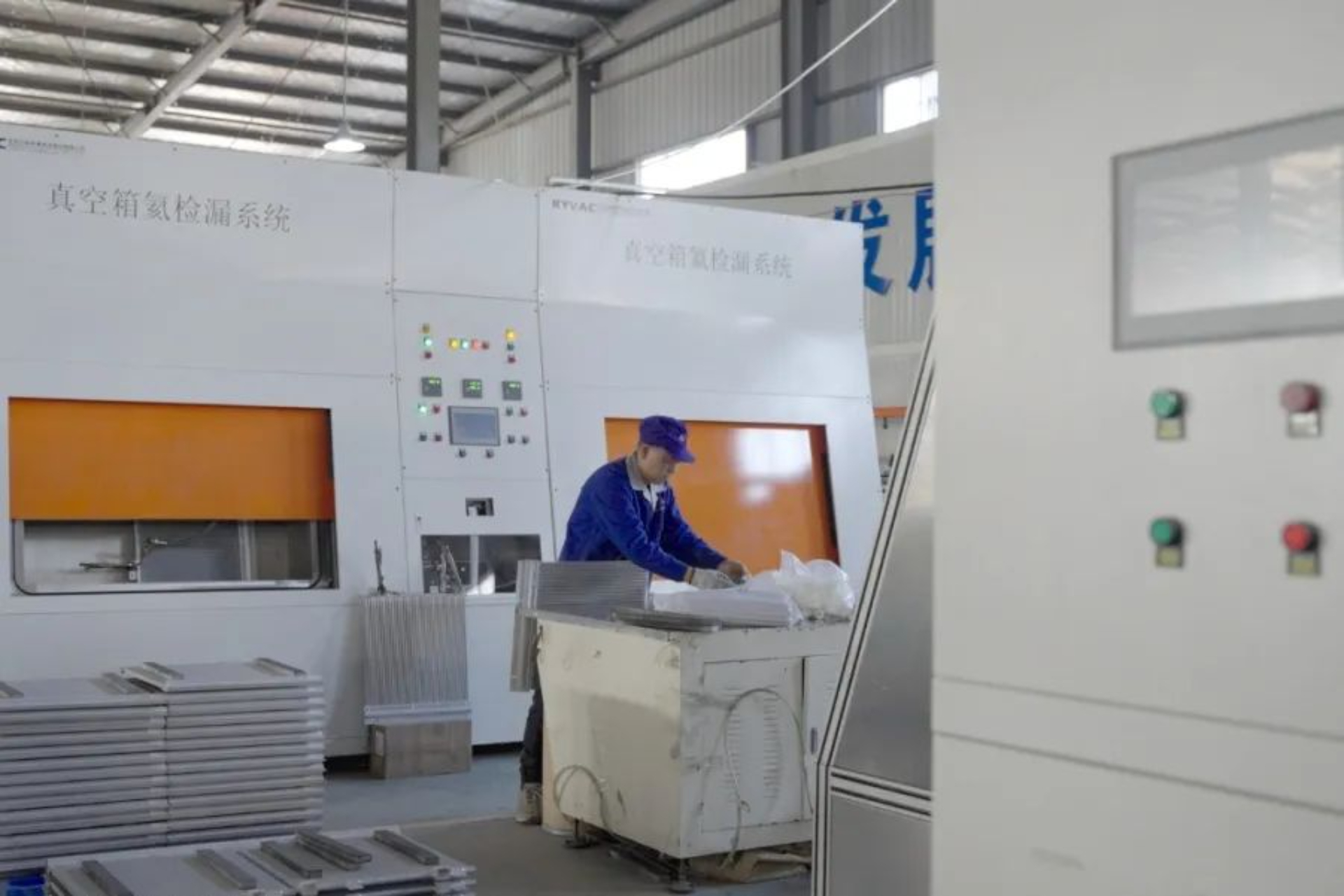
Against the backdrop of Industry 4.0 and intelligent manufacturing, a shared concern among Longquan auto parts manufacturers is how to further strengthen the high-quality, high-efficiency competitive edge of the automotive air-conditioning component industry through comprehensive upgrades of lean production, automation, digitalization and intelligence.
Inside the production workshop of Zhejiang Kilisi Auto Air-Conditioning Co., Ltd., a full range of domestically leading production and testing equipment for automotive air-conditioning condensers and evaporators – including fully automatic core assembly machines, laser welding equipment, brazing tunnel furnaces and helium leak tightness testers – has drastically lifted the enterprise’s production capacity. "Our annual output value growth stood at roughly 10% in previous years. Last year, the entire factory – covering procurement, sales and production workshops – fully deployed a digital brain, driving a sharp surge in production efficiency. Delivery lead times have been cut by one-third, and annual output value growth hit a record high of 20%," Wu Jiwu, the company’s person in charge, told reporters.
Innovation is not a flash of genius, but the fruit of entrepreneurs’ persistent pursuit. Junbo’s leading digital, intelligent and connected transformation is closely linked to Li Chao’s computer science background. Under Li Chao’s blueprint for smart digital factories: "We aim to eventually phase out dedicated planning departments, assigning 80% of the factory’s heavy routine workload to automated systems."
"We are currently calculating data from all procedures and equipment to build a rational indicator system, enabling automatic data feedback across all production links. In other words, the factory will gain autonomous production planning and information feedback capabilities, with real-time calculation and adjustment of output for every process." According to Li Chao, digital technologies empower the restructuring and upgrading of business operation models, effectively replacing large volumes of tedious, repetitive manual labor and lifting operational efficiency across marketing, R&D, supply chain, finance and other segments, thereby realizing comprehensive upgrades of lean manufacturing, automation, digitalization and intelligence.
Within the broader industry, an ambitious blueprint for a RMB 10 billion smart digital industrial chain is taking shape: digital workshops and smart factories empower upstream and downstream supply chain enterprises to achieve digital interconnection; the industry explores application scenarios for artificial intelligence including industrial brains, robotic assisted manufacturing and automated machine inspection; full interconnection across the entire industrial chain enables more precise, targeted industrial chain reinforcement and supplementation…
Racing on Emerging New Tracks
The automotive industry serves as a stabilizer sustaining growth of the industrial economy. Today, skyrocketing production and sales volume plus rising market penetration of new energy vehicles have brought a new turning point for high-end auto parts manufacturing. The new energy vehicle track resembles an enticing treasure chest waiting to be explored and unlocked.
In Longquan, the launch of Geely Auto’s new energy thermal management system assembly project marks a pivotal strategic layout for the automotive component (thermal management) industry.
At present, construction of Geely’s Intelligent Thermal Management System R&D and Industrialization Project is in full swing in the Lutian Block of Zhejiang Longquan Economic Development Zone, with production scheduled to start in the second half of this year. Upon full operation, its annual output value will exceed RMB 1.8 billion.
On this same industrial land, multiple externally introduced auto parts manufacturers have settled down, while local component enterprises are expanding production facilities. Among them, Kilisi’s new plant for new energy thermal management equipment covering 9,000 square meters is undergoing land leveling and facility design preparation.
"The expanded production workshop covers over 6,000 square meters, nearly matching our existing plant size. It will mainly produce plate-fin heat exchangers, a core component for new energy thermal management systems. We have invested over RMB 20 million in plant construction and production equipment procurement, targeting completion by the end of this year and formal operation next year." Product R&D for plate-fin heat exchangers proceeds alongside plant construction, Wu Jiwu told reporters. The existing factory already manufactures condensers and evaporators for new energy vehicle air conditioners. "Among thermal management components, heat exchangers connect evaporators and deliver constant temperature control. Our self-developed plate-fin heat exchanger has passed preliminary simulation testing and is now undergoing vehicle-mounted dynamic performance tests."
Strong technological support is essential to seize emerging new tracks. Inside Kilisi’s product R&D center, technicians are conducting welding and testing on a plate-fin heat exchanger. Pointing to the micro honeycomb structure at the exchanger’s core, technicians told reporters that the central section is stamped and welded from over 70 pieces of 1.8mm aluminum fins, featuring thousands of welding points formed through multi-layer stack welding with zero tolerance for missing or incomplete welds. "Both stamping and welding demand ultra-high standards for precision, quality and efficiency, backed by meticulous and sophisticated process design."
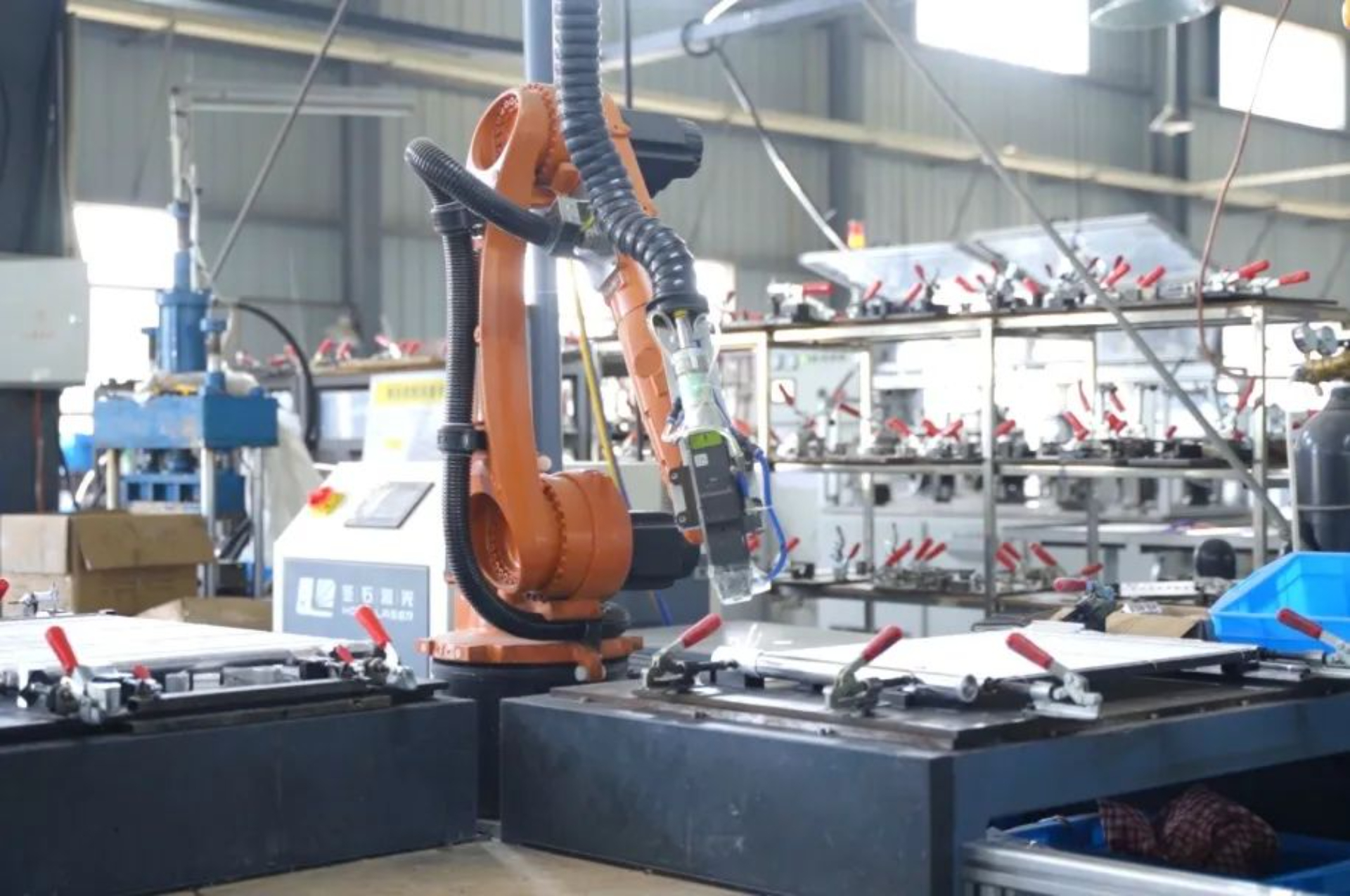
"To seize market opportunities in automotive components, we have maintained long-term close cooperation with prestigious universities including Xi’an Jiaotong University and Zhejiang University for many years. Take new energy heat pump R&D as an example: Xi’an Jiaotong University provides technical support, conducting repeated testing on product lightweight design, cooling performance and corrosion resistance, greatly shortening our R&D cycles," Wu Jiwu said. Plate-fin heat exchangers are now in small-batch production, and he is coordinating mass production plans with multiple clients. "All pre-production testing will be completed before year-end, and mass production of this plate-fin heat exchanger will launch alongside our new factory next year."
In the era of new energy and digital intelligence, competition is no longer limited to products and prices alone. More importantly, enterprises must build a complete industrial innovation ecosystem covering intelligent manufacturing, supply chain systems and sustainable development strategies. In Longquan, the integration of thermal management systems and the automotive air-conditioning component industrial chain, driven by technological innovation, has generated powerful synergies and explosive growth, accelerating rapid expansion of the RMB 10 billion automotive air-conditioning component industrial cluster.



COPYRIGHT © 2022 Zhejiang Junbo Auto Parts Co., Ltd. Technical Support:@JCSW